
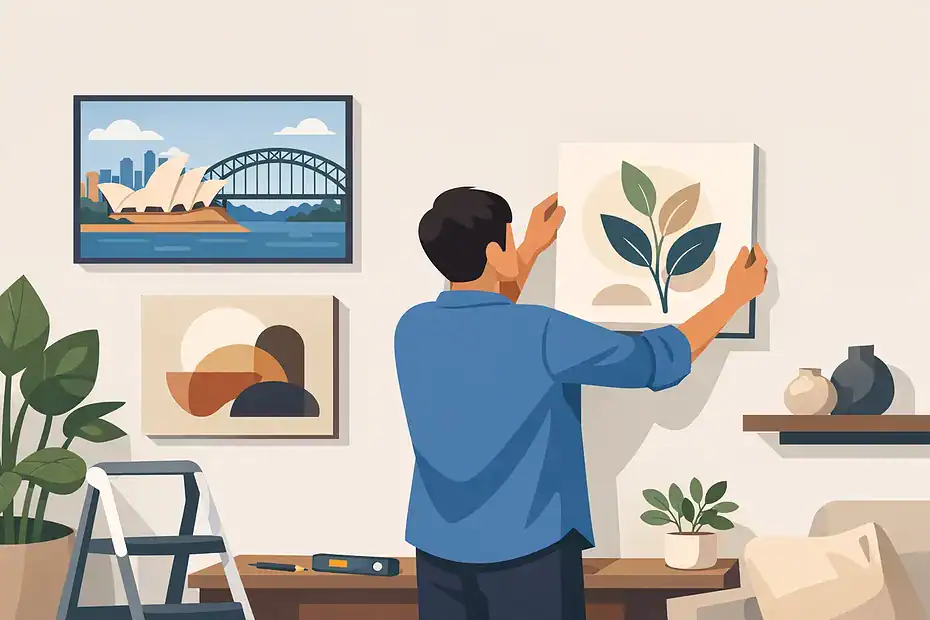
A canvas that sits slightly crooked will bother you every time you walk past it. A canvas that is poorly anchored can do more than look off – it can shift, fall, or damage the wall. That is why the best way to hang canvas art is not just about getting it onto the wall. It is about choosing the right hardware, placing it at the right height, and making sure it suits the room.
Canvas art often looks simpler to hang than framed pieces, but that can be misleading. The lighter profile can make it seem easy, yet stretched canvases still need stable support and careful positioning. If the wall material is wrong for the fixing, or the placement is guessed instead of measured, the finished result rarely looks as polished as it should.
What is the best way to hang canvas art?
For most homes and offices, the best way to hang canvas art is to use hardware that matches the canvas weight and wall type, then place the piece so the visual center sits at a comfortable viewing height. In practical terms, that means measuring first, avoiding generic one-size-fits-all hooks, and making sure the canvas is secured against movement.
A small lightweight canvas on drywall may only need a quality picture hook. A larger canvas, a valuable piece, or anything hung above furniture often calls for more stable fixing points or specialty hardware. If you are hanging on brick, concrete, plaster, or steel-framed walls, the method changes again. That is where many DIY attempts go wrong – the canvas itself is only half the job, while the wall determines the rest.
Start with the wall, not the artwork
People usually focus on the size and style of the canvas first. Installers look at the wall first because that tells you what is actually possible.
Drywall is common and fairly forgiving, but even then, weight matters. A light canvas can often be supported with standard picture hanging hardware, while a larger piece may need anchors or studs. Plaster can be more brittle and prone to cracking if handled roughly. Brick and concrete offer excellent strength, but they require the correct tools and fixings. If you use the wrong hardware, the canvas may feel secure at first and still fail later.
This is also why rental properties and apartments need a bit more care. You may want the most discreet method possible to limit visible damage, but the lightest-touch option is not always the safest one. There is usually a balance between a neat finish, long-term hold, and wall preservation.
Height matters more than most people think
One of the most common mistakes is hanging canvas art too high. It happens in living rooms, hallways, offices, and waiting areas because people tend to judge placement from standing height alone.
In most spaces, the piece should sit where it feels connected to the room rather than floating above it. A common guideline is to place the center of the artwork at eye level, but that should be adjusted based on ceiling height, nearby furniture, and whether people will mostly view it seated or standing. Above a sofa, bed, or console, the canvas should visually relate to the furniture below it instead of drifting too far upward.
This is where an experienced eye helps. Technically correct placement is not always visually right. A canvas can be level, secure, and still feel awkward if the spacing is off.
The best hardware depends on the canvas
Not all canvases are built the same way. Some have a solid timber frame with strong support points. Others are lighter and less rigid, especially mass-produced pieces. The hardware should match both the weight and the structure.
For small and medium canvases, sawtooth hangers or D-rings can work well when properly fitted. Wire is sometimes used, but it can introduce extra movement and make exact leveling harder, particularly on wider pieces. Larger canvases often benefit from two fixing points rather than one because they stay more stable and are less likely to shift over time.
If the artwork is oversized, valuable, or going into a commercial setting, security and alignment become even more important. In those cases, a simple hook may not be the best choice even if the weight technically allows it. A more secure mounting method can provide a cleaner finish and better long-term reliability.
Best way to hang canvas art above furniture
Hanging above furniture changes the rules slightly because the artwork becomes part of a larger visual arrangement. The best way to hang canvas art above a sofa, sideboard, bed, or desk is to keep the spacing intentional and the width proportionate.
If the canvas is too small for the furniture, it can look lost. If it is too high, the whole setup feels disconnected. A good rule is to leave enough breathing room above the furniture without creating a large empty gap. The artwork should feel anchored to the space below it.
This gets more complex when you are hanging multiple canvases. The spacing between pieces needs to be consistent, and the group should be centered as a whole, not just piece by piece. A gallery arrangement may look relaxed when finished, but getting it to feel balanced takes planning.
When DIY works and when it does not
There are times when hanging canvas art yourself makes perfect sense. If the piece is small, lightweight, going onto an easy wall surface, and the placement is straightforward, a careful DIY install can work well.
But there are also clear situations where professional help is the smarter option. Heavy canvases, high walls, staircases, tricky wall materials, expensive artwork, and multi-piece layouts all raise the stakes. The same applies if the canvas is going into a business, reception area, or client-facing space where presentation matters.
The trade-off is simple. Doing it yourself may save money upfront, but if the piece ends up crooked, unstable, or leaves unnecessary wall damage, it often costs more to fix later. For people who care about both safety and presentation, specialist installation is usually the cleaner path.
Common mistakes that ruin the final look
The biggest issue is guessing. Guessing the center point, guessing the hardware, guessing the wall strength, or guessing the spacing above furniture usually leads to a result that feels slightly off.
Another common mistake is relying on a single central fixing for a wide canvas. Even when the weight is manageable, the piece can tilt or shift with vibration, cleaning, or accidental bumps. Using the wrong anchor is another frequent problem, especially in plaster or masonry walls.
Then there is the visual side. A canvas can be perfectly straight and still look wrong if it is too close to one object, too far from another, or out of scale with the room. Good installation is part measurement and part judgment.
Why professional hanging makes a difference
A specialist does more than put a hook in the wall. The real value is knowing how to match the hardware to the wall, how to position the canvas for the room, and how to avoid the small errors that make a finished install look amateur.
That matters even more with feature walls, sets of canvases, or important pieces you do not want to risk. Professional installation also saves time, avoids repeated patching and repainting, and gives you confidence that the work is secure.
For homeowners, that means less trial and error. For offices and commercial spaces, it means the artwork supports the space instead of distracting from it. A clean, level, well-placed canvas always looks more expensive than one that was rushed.
At HanGsy, this is exactly where specialist service matters most – secure installation, accurate placement, and a result that looks right the first time.
Final thoughts on the best way to hang canvas art
The best results come from treating canvas hanging as both a technical job and a design decision. If the fixing is right but the placement is wrong, it will still feel off. If it looks good but is not properly secured, it is not finished.
A well-hung canvas should feel effortless once it is on the wall. Getting there usually takes more care than people expect, and that extra care is what makes the piece look like it truly belongs in the room.
Pingback: Picture Hanging Central Coast Done Right - HanGsy
Pingback: Large Artwork Hanging Guide for Clean Results - HanGsy
Comments are closed.