
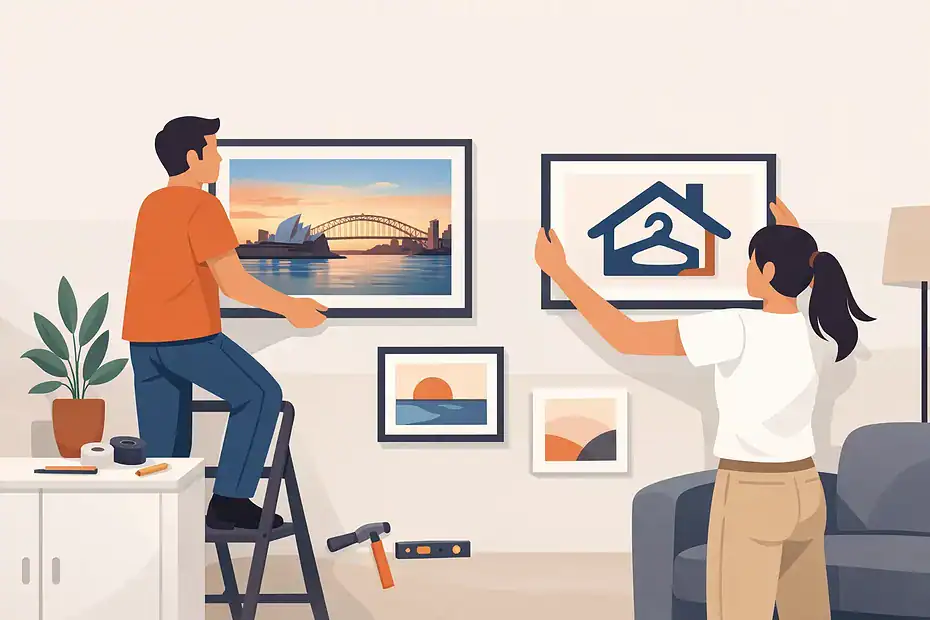
A framed print that sits 2 inches too high can make the whole wall feel off. A heavy piece fixed into the wrong spot can do more than spoil the look – it can damage plaster, loosen over time, or come down when you least expect it. That is why framed artwork installation Sydney clients book is rarely just about putting a hook in the wall. It is about getting security, spacing, balance, and presentation right the first time.
Why framed artwork installation in Sydney needs more than a tape measure
Most people know when a piece does not look right, even if they cannot explain why. The frame may be level, yet the wall still feels awkward. That usually comes down to placement, proportion, wall type, viewing height, nearby furniture, and how the artwork relates to everything around it.
Professional installation solves both the technical and visual side of the job. The technical side covers wall material, weight support, anchor selection, and safe fixing. The visual side is just as important. A well-placed artwork can make a room feel taller, calmer, or more finished. Poor placement can make an expensive piece feel like an afterthought.
This is especially true in apartments, renovated homes, and commercial spaces where walls vary more than people expect. Gypsum board, masonry, brick, concrete, tile, and partition walls all call for different hardware and different handling. Two framed pieces that look similar from the front may need very different installation methods once weight, backing, and frame construction are checked.
What makes a good artwork installation result
A strong result starts before anything touches the wall. Size matters, but so does visual weight. A dark frame can read heavier than a pale one. A wide mat changes the apparent scale. Glass adds reflection, which affects where a piece should sit in relation to windows and lighting.
The best installations usually get four things right. The artwork is centered where the eye expects it. The fixing is appropriate for the wall and weight. The spacing works with nearby furniture or adjoining pieces. And the finish is clean, with no trial holes, crooked lines, or rushed adjustments.
That sounds simple, but real spaces introduce trade-offs. A perfect center point may clash with a light switch. A secure fixing point may need a slight shift from the original plan. A hallway piece may need to hang higher than a living room piece because people view it while moving through the space. Good installation is not guesswork. It is judgment.
When DIY works and when it usually does not
If you are hanging a light frame on a straightforward wall and the exact placement is not critical, DIY can be fine. Plenty of homeowners are comfortable with a small bedroom print or a casual family photo wall. The risk is lower, and the cost of getting it slightly wrong is usually minor.
The job changes when the piece is valuable, oversized, glazed, heavy, part of a grouped layout, or going into a difficult wall. At that point, a mistake is not just cosmetic. You may end up with cracked plaster, visible patch marks, misaligned pieces, or hardware that is not actually rated for the load.
Commercial spaces raise the stakes further. Offices, reception areas, retail premises, and shared buildings need installation that is tidy, reliable, and presentable. Artwork that tilts, shifts, or loosens over time does not create the right impression.
Framed artwork installation Sydney homes and businesses request most often
Some jobs are simple single-piece hangs. Others need a more considered plan. In practice, the most common requests tend to fall into a few categories.
Single statement pieces
Large framed artwork above a sofa, bed, console, or dining setting needs accurate height and width placement. Even a small error becomes obvious when the piece is acting as the focal point of the room.
Gallery walls and grouped arrangements
These look effortless when done well and frustrating when done badly. Consistent spacing, line alignment, and overall shape matter more than many people expect. The installer needs to think about the full composition, not just each individual frame.
Staircases and hallways
These areas are harder because sightlines shift as you move. A layout that looks right from the bottom of the stairs may feel uneven halfway up. This is where experience helps.
Offices and commercial interiors
Boardrooms, waiting areas, and client-facing spaces often need framed pieces placed to match furniture layouts, branding, and traffic flow. The finish has to be polished, because people notice details in professional settings.
The details that affect placement
A lot of installation quality comes down to details people do not always see at first.
Viewing height is a common issue. There is no universal number that works in every room. Eye level is a useful guide, but furniture, ceiling height, and the size of the piece all influence the final position. Artwork above a sofa usually sits lower than artwork on an empty feature wall.
Spacing also changes the feel of a room. Tight spacing creates cohesion in a gallery wall. Wider spacing can make each piece feel more independent and architectural. Neither is wrong. It depends on the style of the room and the effect you want.
Then there is light. Glass-covered artwork placed opposite strong windows can create glare that hides the image. In some rooms, moving the piece just slightly solves it. In others, placement has to balance symmetry with practicality.
Wall condition matters too. Older surfaces may need more care. Fresh paint can mark easily. Some walls look solid but have hidden limitations behind the finish. A specialist checks what the wall can actually support before committing to a fixing point.
Why heavy or valuable frames should be handled professionally
Heavy framed artwork is where amateur installs tend to unravel. Weight is only part of the issue. Frame construction, hanging points, glass type, and wall composition all affect the final method.
A large piece may need two fixing points for stability rather than one central hook. A valuable frame may need more careful handling during measuring and lifting. In some cases, the artwork itself is not especially heavy, but the consequences of it falling are serious because of where it is placed or what sits beneath it.
That is why specialist installers focus on both security and finish. You want a piece that is safe today and still sitting properly months from now. A quick install that starts leaning after a short time is not a successful job.
What to expect from a professional service
A proper service should feel straightforward. You explain what needs to be hung, where it is going, and any known wall or access issues. From there, the installer can assess likely hardware needs, placement considerations, and whether the job is simple or more custom.
On site, the difference is usually obvious. The process is measured, clean, and deliberate. Placement is checked before drilling. Alignment is verified. Hardware is selected to suit the frame and wall, not pulled from a one-size-fits-all kit.
For clients who care about presentation, this matters just as much as the fixing itself. A specialist is not there just to make the piece stay up. They are there to help it look right in the room.
That is one reason many Sydney clients use a dedicated hanging service instead of a general handyman. HanGsy, for example, focuses specifically on picture, art, canvas, and mirror installation, which gives clients confidence that both the technical and aesthetic side of the job are being handled properly.
How to prepare before booking installation
You do not need a full design plan, but a little preparation helps. Know which pieces are going up and roughly where you want them. If you are undecided, that is fine too – it helps to identify the wall and the nearby furniture so placement can be worked through on site.
If the artwork is part of a larger arrangement, have all the pieces ready at the same time. It is much easier to get a balanced result when the full group is measured together. If access is tight, such as in stairwells or apartments, mention that early.
Photos can also help when requesting a quote. A clear image of the wall, the artwork, and the surrounding area often gives enough context to flag any special requirements before the visit.
Choosing the right installer for framed artwork installation Sydney wide
Not every installer approaches artwork the same way. If presentation matters, look for a service that treats placement as part of the job, not an afterthought. Experience with different wall types, heavy pieces, and grouped layouts is worth asking about.
It also helps to choose a provider that offers clear communication and an easy booking process. Free quotes are useful because they remove some of the hesitation around getting started, especially if you have several pieces or an unusual setup.
The right installer should make the job feel simpler, not more confusing. You want confidence that the piece will be secure, the room will look better, and you will not be left patching avoidable mistakes afterward.
A well-hung framed artwork does not call attention to the installation. It just feels right in the space, as if it always belonged there. That is usually the clearest sign the job was done properly.