
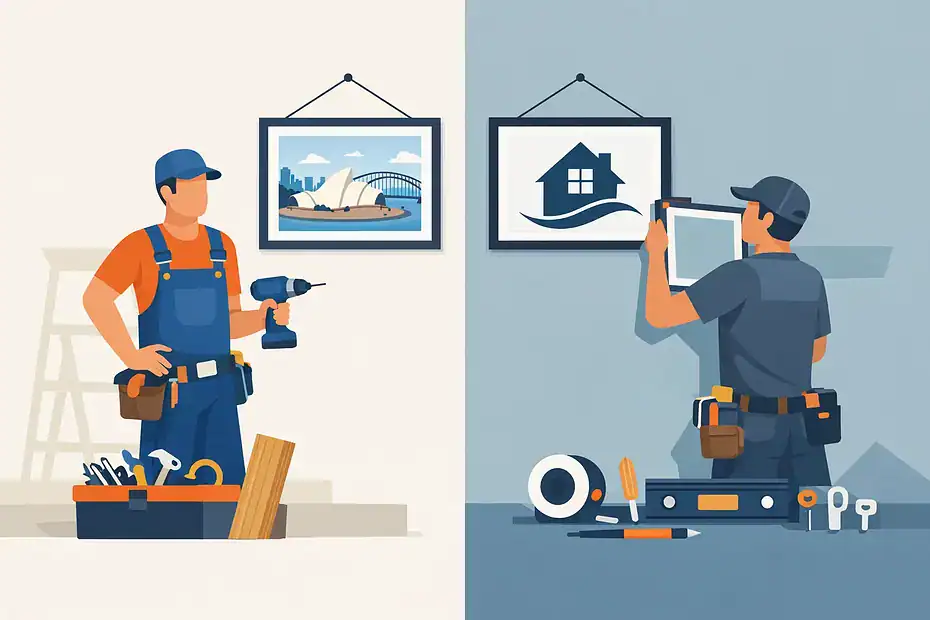
A crooked frame is annoying. A cracked mirror, torn drywall, or a row of holes from bad placement is expensive. That is where the real difference in handyman vs hanging specialist starts to show.
If you only need a simple item mounted and the stakes are low, a general handyman may be enough. But if you are hanging valuable art, a heavy mirror, a gallery wall, or anything that needs to look exactly right, a hanging specialist is usually the better fit. The job is not just about getting something onto a wall. It is about secure installation, clean positioning, proper hardware, and visual balance in the room.
Handyman vs hanging specialist: what is the difference?
A handyman is a generalist. They often handle a wide mix of home tasks such as patching drywall, assembling furniture, minor repairs, mounting shelves, and basic installation work. That versatility can be useful when you have several unrelated jobs to finish in one visit.
A hanging specialist focuses on wall-mounted pieces that need accuracy and presentation. That includes framed art, canvases, mirrors, picture groupings, and commercial display installations. The difference is not only technical. It is also visual. A specialist is thinking about stud location, weight distribution, wall type, and anchor choice, but also spacing, sight lines, symmetry, and how a piece sits in the room.
That combination matters more than many people expect. A frame can be level and still look wrong. It can be secure and still sit too high, too low, or too far from surrounding pieces. A hanging specialist is hired to get both parts right.
When a handyman makes sense
There are situations where a handyman is a practical choice. If you are mounting a basic item with little weight, little value, and no real design sensitivity, a general service can be perfectly reasonable. The same applies if you already have exact measurements, know the height you want, and are mainly looking for someone to save you the time of doing it yourself.
A handyman can also be the right fit when hanging is only a small part of a larger to-do list. If you need curtain rods installed, a door adjusted, a shelf secured, and one standard frame put up, using one general service may be more efficient.
The trade-off is that general service does not always mean specialist judgment. Some handymen are excellent at hanging work, but that is not guaranteed. If the item is heavy, fragile, expensive, or visually important, it is worth asking whether this is a routine add-on task for them or a core part of what they do.
When a hanging specialist is the better choice
A hanging specialist earns their place when the margin for error is small. Heavy mirrors are a clear example. They need the right fixings, careful handling, and confidence in the wall structure. If one shifts or fails, the damage can be serious.
Artwork is another category where specialization matters. A large framed piece, a canvas collection, or a gallery wall can change the feel of a room, but only if placement is right. The installer needs to think beyond the hardware and consider proportion, alignment, spacing, and viewing height.
This is especially useful in homes with high-end finishes, apartments where wall damage is a concern, and offices where presentation matters to clients and staff. In those settings, people are not just paying for labor. They are paying for precision, cleaner results, and fewer chances to redo the job.
The real issue is risk, not just cost
People often compare a handyman and a specialist on price alone. That is understandable, but it is usually too narrow. The more useful question is what happens if the job is done poorly.
If a lightweight decor piece ends up a little off, the cost of fixing it may be minor. If a mirror is mounted incorrectly, if art is hung with the wrong anchors, or if multiple holes are drilled because the layout was misjudged, the cheaper option can become the more expensive one very quickly.
This is why specialist service tends to make sense for higher-value pieces and spaces where appearance matters. You are reducing the chance of rework, wall repairs, replacement costs, and frustration. You are also saving the time that comes from second-guessing every measurement.
Installation skill and design judgment are not the same thing
One of the biggest mistakes people make is assuming that anyone who can use a drill can hang art well. Basic mounting skill is only one part of the job.
Good hanging work requires reading the room. How high should the piece sit above a console? Should the center line match nearby elements? Will a group of frames feel balanced once furniture is in place? Is the wall surface suitable for the chosen hardware? These are small decisions, but they shape the final result.
That is where a dedicated service stands apart. A true hanging specialist does not treat placement as an afterthought. It is part of the service. For clients who care about clean lines, polished presentation, and getting it right the first time, that matters.
What to ask before hiring either one
Whether you are considering a handyman or a hanging specialist, ask clear questions before booking. Experience with mirrors, framed art, and multi-piece layouts is worth confirming. So is familiarity with drywall, masonry, brick, and other wall types.
It also helps to ask how they approach placement. Do they simply install where you point, or do they offer guidance on height and spacing? For some clients, that guidance is a major reason to hire help in the first place.
If the item is valuable or oversized, ask what hardware they use, whether they handle heavy installations regularly, and whether they can work across a full room or office if you have multiple pieces. The answers will usually tell you whether you are hiring someone for convenience or hiring someone for expertise.
For homes, apartments, and offices, precision changes the outcome
In a lived-in home, poor placement nags at you every time you walk past it. In an apartment, unnecessary holes can become a problem later. In an office, a crooked piece or uneven layout can quietly make the whole space feel less polished.
That is why specialist hanging services appeal to more than art collectors. Families, renters, business owners, and office managers often want the same thing: secure installation without the trial and error. They want someone who can handle the technical side while also making the wall look intentional.
For commercial spaces, this becomes even more useful. Reception areas, boardrooms, hallways, and client-facing rooms need consistency. A specialist can install multiple pieces with clean alignment and a more professional finish, which is hard to achieve when hanging is treated as a side task.
So, who should you hire?
If the job is simple, low-risk, and part of a broader repair list, a handyman may be all you need. There is nothing wrong with choosing a generalist when the task truly is general.
If the piece is heavy, fragile, valuable, or central to how the room looks, a hanging specialist is the stronger choice. You are hiring for accuracy, safety, and visual judgment, not just labor. That is exactly why specialized services exist.
For clients who want art, mirrors, and wall displays installed with care and clean presentation, HanGsy is built for that kind of work. The focus is narrow on purpose, because hanging well is a specialty.
The best hire is the one that matches the stakes of the job. If you care where it sits, how it looks, and whether it stays secure, treat hanging like the specialist service it is.