
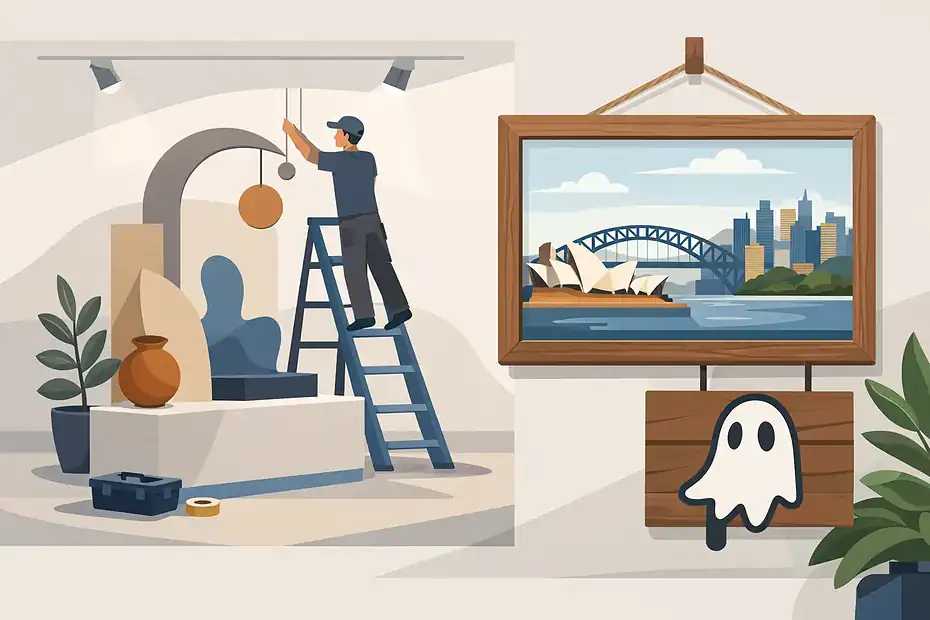
A crooked frame can throw off an entire room. A heavy mirror fixed into the wrong wall can do much worse. If you are looking for art installation Inner West property owners can rely on, the job is rarely just about getting something onto a wall. It is about placement, safety, balance, and making sure the finished result actually suits the space.
In homes, apartments, offices, and retail settings, professionally installed artwork changes how a room feels. The right piece, hung at the right height with the right spacing, adds structure and personality. The wrong placement can make even expensive art look like an afterthought. That is why specialist installation matters.
Why art installation in the Inner West needs a specialist
The Inner West has a mix of property types, and that affects how artwork should be installed. Federation homes, renovated terraces, new apartments, creative studios, and commercial spaces all come with different wall surfaces, ceiling heights, layouts, and access issues. What works in one room may not work in the next.
This is where a general handyman and a dedicated hanging specialist are not the same thing. A specialist is not simply attaching hooks. They are assessing wall material, checking weight, choosing the correct fixings, and working out the most visually effective position. That combination of technical skill and design judgment is what protects both your walls and your artwork.
There is also a practical side. Many clients put off hanging art because they do not want to patch holes, guess at spacing, or risk damaging a valuable piece. Others start the job themselves, then stop after realizing how hard it is to get one frame straight, let alone a full gallery wall. Professional installation removes that friction.
What a professional art installation Inner West service actually helps with
The biggest benefit is accuracy. That sounds simple, but it is where most DIY attempts go wrong. Height, alignment, and spacing all need to work together. A piece that is too high can make a room feel disconnected. One that is too low can feel cramped. When multiple works are involved, even a few millimeters off can become obvious.
Security matters just as much. Mirrors, oversized frames, canvases, and statement pieces need proper support, especially in busy family homes or commercial environments. The right hardware depends on the wall and the weight of the item, not just the size of the frame. Plasterboard, brick, concrete, and masonry each need a different approach.
Then there is efficiency. A trained installer can walk into a space, assess the layout quickly, and complete the job with far less trial and error. For homeowners, that means less stress and no half-finished walls. For businesses, it means less disruption and a cleaner, faster result.
Residential spaces: making the room feel finished
In a home, art does more than fill empty wall space. It creates focus, adds warmth, and helps rooms feel intentional. But good placement depends on the room itself. A large artwork above a sofa needs a different scale and hanging height than a series of family frames in a hallway. A mirror in an entryway has a different function than one in a bedroom or dining area.
This is why measurement alone is not enough. You also need proportion. A professional installer looks at furniture placement, ceiling height, wall width, nearby lighting, and sightlines. The goal is not simply to hang the piece level. It is to make it look like it belongs there.
Apartment living adds another layer. Smaller walls, tighter access, and body corporate considerations can make installation more complicated. In these spaces, precision becomes even more important because every visual decision is more noticeable.
Commercial installation: presentation affects perception
In offices, clinics, retail spaces, and hospitality venues, artwork contributes to how clients and staff experience the environment. It can make a reception area feel more polished, soften a boardroom, or give a retail wall stronger visual structure. When art is installed poorly, it has the opposite effect. It can make the space feel rushed or inconsistent.
Commercial work also tends to involve scale. You may be installing multiple framed prints across a hallway, branding elements in customer-facing areas, or feature pieces in shared spaces. That calls for a planned, repeatable approach. Consistency in height, spacing, and alignment becomes part of the overall presentation.
There is also a safety and durability issue in business settings. High-traffic spaces need secure installation that holds up over time. That is especially true for heavier mirrors or large framed works in lobbies, waiting rooms, or fit-outs.
Common mistakes people make before calling a professional
One of the most common problems is choosing placement based on instinct instead of the room. People often hang pieces too high, especially above furniture. Another frequent issue is using hardware that is not suited to the wall type or the item weight. The frame may appear secure at first, but that does not mean it is properly installed.
Gallery walls are another example. They look easy until you try to line up different frame sizes across a real wall. Without a clear layout and exact measurements, spacing starts to drift. Once multiple holes are in place, fixing the arrangement becomes frustrating fast.
Heavy mirrors are where DIY gets especially risky. These pieces often need stronger anchors and a more careful load assessment than people expect. A mirror is not something you want to test by guesswork.
What to look for in an art installer
If you are comparing providers, specialization matters. You want someone who regularly handles picture hanging, mirror mounting, canvas installation, and multi-piece layouts, not someone who treats it as a side task. Experience with both homes and commercial spaces is also useful because each environment comes with different expectations.
Clear communication is another good sign. A professional service should be able to explain how the work will be done, what kind of fixings are appropriate, and how placement decisions will be approached. Free quotes help too, especially if you are planning multiple pieces or a more involved installation.
It is also worth looking for a service that understands the visual side of the job. Technical ability is essential, but so is the ability to advise on placement when a client wants the result to feel balanced and polished.
When it makes sense to book professional help
Not every frame on every wall needs a specialist. But there are situations where professional installation is the smarter choice from the start. If the item is heavy, valuable, oversized, difficult to position, or part of a larger arrangement, expert help usually saves time and prevents mistakes.
The same applies if your walls are tricky, your ceilings are high, or your schedule is tight. For businesses, professional installation is often the better option simply because it reduces downtime and delivers a more consistent finish. For homeowners, it is often about confidence. You want it done properly, and you do not want to spend your weekend remeasuring and repainting small holes.
That is where a specialist service like HanGsy fits naturally. The value is not just in hanging the item. It is in doing it securely, neatly, and in a way that improves the room.
The difference the final result makes
When art is installed well, people notice the room before they notice the hardware. That is the point. The piece sits at the right height, the spacing feels natural, and the wall looks finished rather than improvised. In a home, that creates a calmer, more put-together feel. In a business, it supports a more professional presentation.
Good installation is one of those details that seems small until it is wrong. Then it is all anyone sees. If you are planning art installation in the Inner West, it is worth treating the job as part technical work, part visual decision. Get both right, and the space comes together with far less effort than trying to fix mistakes later.
A well-hung piece does more than stay on the wall. It gives the room its point of view.