
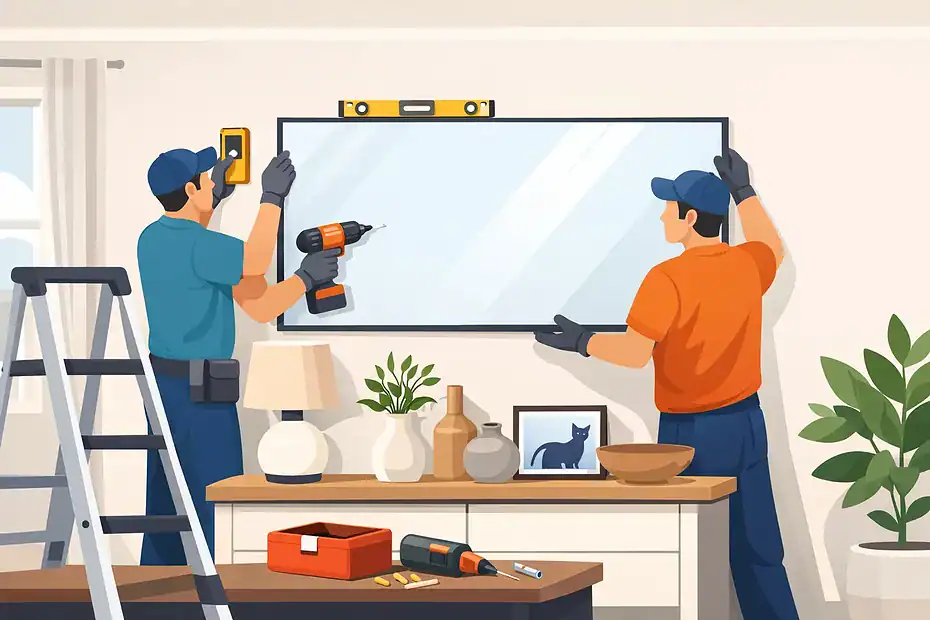
A heavy mirror can transform a room in minutes – or crack a wall, pull loose, and shatter if it is mounted the wrong way. If you are figuring out how to mount heavy mirrors, the real job is not just getting it onto the wall. It is choosing the right fixing method for the mirror’s weight, the wall type, and the exact position so it looks right and stays put.
That is where many DIY attempts go sideways. A mirror may seem secure at first, only to shift slightly, sit crooked, or place too much stress on plaster, drywall, or masonry. With heavier pieces, good installation is part safety, part precision, and part visual judgment.
What matters before you mount a heavy mirror
The first question is not where you want the mirror. It is what you are hanging, and what you are hanging it on. A large framed mirror with a timber backing behaves very differently from a slim metal-framed mirror or a thick beveled glass piece. Weight distribution matters just as much as total weight.
Wall construction matters too. Drywall over studs gives you one set of options. Brick, concrete, tile, and plaster each require a different approach. The same hardware that works well in a stud wall may be the wrong choice for masonry, and vice versa. This is why there is no one-size-fits-all answer to how to mount heavy mirrors.
Placement also needs more thought than people expect. A mirror above a console table may need to be centered to furniture, not the wall. A hallway mirror often needs to account for sightlines and walking clearance. In bathrooms, heat, moisture, tile lines, and plumbing behind the wall can all affect where and how it should be fixed.
How to mount heavy mirrors without guesswork
The safest approach starts with three checks: mirror weight, wall type, and hanging hardware. If you skip any one of these, you are estimating rather than installing.
Start by confirming the mirror’s actual weight. Do not rely on rough guesses. Manufacturer details are ideal, but if those are unavailable, weigh it properly before choosing anchors or brackets. Hardware should always be rated comfortably above the mirror’s weight, not just equal to it.
Next, identify the wall. Stud finders can help on drywall, but older homes, patched walls, and some plaster finishes can give misleading readings. Masonry walls need the correct drill bit and anchor system. Tiled walls add another layer of complexity because you are drilling through a brittle surface before reaching the substrate behind it.
Then inspect the mirror’s existing hanging points. Some mirrors come with D-rings, some with wire, and some with built-in brackets. Not all factory fittings are ideal for the final wall location. In many cases, especially with larger mirrors, upgrading the hanging system is the safer choice.
Choosing the right hardware
This is where most installation failures begin. The issue is not always bad workmanship. Often it is the wrong hardware for the weight or wall surface.
For stud walls, fastening directly into studs is usually the strongest option. If the mirror’s width and hanging points align with the stud positions, this can create a very secure hold. The catch is that ideal visual placement does not always line up with framing behind the wall. When that happens, specialized heavy-duty anchors may be used, but only if they are suitable for the wall material and load.
For masonry, heavy-duty wall plugs, sleeve anchors, or similar fixing systems are typically used, depending on the wall and the mirror. For plaster walls, extra caution is needed because surface strength can be deceiving. The wall may look solid but still fail under concentrated weight if the fixings are poorly chosen.
Mirror clips, Z-bars, French cleats, and direct bracket systems can all work well. The best option depends on the size of the mirror, whether the frame hides the hardware, and whether the goal is a flush finish or slight stand-off from the wall. A wire-hung system may suit some mirrors, but for heavier pieces, more rigid support often gives a safer and cleaner result.
Why level is only part of the job
People often focus on getting the mirror straight, which makes sense, but level alone is not enough. Heavy mirrors also need balanced load distribution. If one side is carrying more force than the other, the mirror may drift over time or place uneven pressure on the wall fixings.
That is why measuring from a single point is rarely enough. Proper installation means marking both sides accurately, accounting for the distance from the top of the frame to the actual hanging point, and checking for any variation in the mirror hardware itself. Not every frame is perfectly manufactured, and a small inconsistency can throw off the final result.
In design-focused spaces, placement should also relate to the room. A mirror that is technically centered but visually too high, too low, or too close to another feature will still look wrong. This is one reason clients often prefer a specialist rather than treating mirror hanging like basic handyman work.
Common mistakes when mounting heavy mirrors
One of the most common problems is trusting drywall anchors that are not rated for dynamic load. A mirror may not move much, but doors closing, floors vibrating, or minor contact can create repeated stress. Over time, that matters.
Another mistake is hanging from wire alone without considering how the load transfers to the wall. Wire can shift, stretch slightly, or concentrate force in ways that make the mirror less stable. It is not automatically wrong, but it is not always the best choice for larger or heavier pieces.
Poor measuring is another major issue. A few millimeters off at the marking stage can leave visible tilt, awkward spacing above furniture, or the need to patch and redrill. That is frustrating on painted drywall and even more so on tile, stone, or finished commercial walls.
Then there is simple handling risk. Heavy mirrors are awkward. Even if you know the right fixings to use, lifting a large piece into place without damaging the frame, the wall, or the surrounding furniture is often a two-person or three-person job.
When DIY makes sense, and when it does not
If the mirror is modest in size, the wall is straightforward, and you are confident identifying studs or using the proper anchors, a careful DIY installation can work. The key word is careful. You need accurate measurements, appropriate tools, and enough help to lift and position the mirror safely.
If the mirror is oversized, unusually valuable, going onto tile or masonry, or being installed in a high-traffic area, the margin for error gets much smaller. The same applies when visual placement really matters, such as above a mantel, in an entryway, across a stair landing, or in a business reception area.
This is also where professional installers bring value beyond labor. They know how to mount heavy mirrors in a way that protects both the item and the wall while making the final placement look intentional. That combination of safety and presentation is what people usually want, even if they start out thinking the job is just a couple of screws.
Special considerations for apartments and commercial spaces
In apartments, wall type is often less obvious than expected. You may be dealing with concrete, metal studs, services behind the wall, or body corporate restrictions that limit how and where items can be fixed. A heavy mirror in a compact space also needs careful positioning so it enhances the room rather than overwhelming it.
In offices, retail spaces, and shared commercial interiors, safety carries even more weight. A mirror that comes loose in a public-facing environment is not just a repair issue. It can become a liability issue. Commercial settings also tend to demand tighter alignment, cleaner finishes, and minimal disruption during installation.
For clients who want a polished result without trial and error, specialist hanging services can save time and prevent expensive mistakes. That is especially true when multiple pieces need to work together visually.
The finish should look effortless, even if the install is not
The best-mounted heavy mirrors look simple. They sit flush or exactly as intended, they feel secure, and they fit the room as though they were always meant to be there. Getting to that point usually takes more planning than most people expect.
If you are deciding how to mount heavy mirrors, think beyond the first lift onto the wall. Think about long-term hold, clean alignment, the surface behind it, and how the mirror works in the space. A secure install should give you confidence every time you walk past it – not a quiet suspicion that you should have used better hardware or called in an expert like HanGsy.
A heavy mirror should add impact to a room, not risk.
Pingback: Commercial Mirror Installation Checklist - HanGsy
Pingback: What Height to Hang Artwork at Home - HanGsy
Pingback: When Do Mirrors Need Anchors? - HanGsy
Comments are closed.