
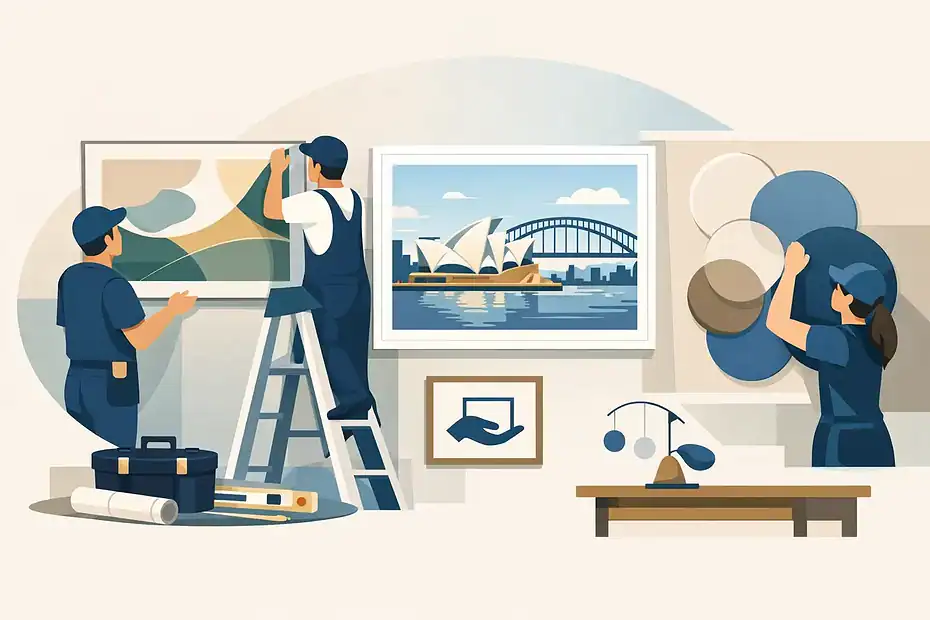
A crooked frame in a reception area does more damage than most businesses realize. It pulls the eye for the wrong reason, makes the whole wall feel off, and quietly chips away at the polished look your space is supposed to create. That is why commercial art installers Sydney businesses call are not just there to put hooks in walls. They help protect presentation, safety, and the overall impression your workplace gives clients, staff, and visitors.
In a commercial setting, artwork has a job to do. It can soften a corporate office, add credibility to a professional suite, create warmth in a hospitality venue, or reinforce branding in retail and shared spaces. But none of that works if the installation is rushed, uneven, or not suited to the wall type and weight of the piece.
Why commercial art installation needs a specialist
Commercial walls are rarely as straightforward as they look. One space may have drywall over studs, another may use concrete, brick, or metal framing, and many fit-outs include surfaces that need extra care to avoid visible damage. Add oversized framed pieces, mirrors, multi-panel works, or gallery-style arrangements, and the margin for error gets small very quickly.
This is where specialist installers stand apart from general handymen. A proper art installer understands load-bearing requirements, hardware selection, wall conditions, spacing, alignment, and visual balance. That combination matters. You are not only trying to keep a piece secure. You are trying to make it look right from the moment someone walks into the room.
There is also a practical business reason to get it right the first time. Repatching walls, replacing broken frames, adjusting poorly placed anchors, or reinstalling a full art layout costs time and money. In active offices and customer-facing spaces, it can also create disruption you did not plan for.
What good commercial art installers in Sydney actually do
The best commercial art installers in Sydney bring two things to the job at the same time: technical accuracy and an eye for placement. That balance is what separates a secure installation from a finished result that actually improves the room.
For some businesses, the need is simple. A few framed prints need to be mounted cleanly in private offices or meeting rooms. For others, the scope is broader. Think reception feature walls, long hallway series, heavy mirrors in shared areas, or a full rollout across multiple rooms. In either case, the process should feel organized, efficient, and tailored to the space.
A qualified installer will usually assess the artwork, wall materials, hanging height, room use, and traffic flow before installing anything. That matters because placement is not universal. A reception wall may call for a stronger visual center. A boardroom may need a cleaner, more restrained arrangement. A busy hallway might require extra attention to fixing strength and sightlines.
Some jobs also involve trade-offs. The mathematically centered position is not always the best visual position if furniture, lighting, signage, or architectural features shift how the wall is perceived. In commercial interiors, precision is not just about measurements. It is about how the finished piece sits in the real environment.
Where businesses usually get it wrong
A common mistake is assuming art installation is a quick maintenance task. It looks simple until the first anchor fails, the frame sits a half inch off level, or the spacing between pieces feels inconsistent across a long wall. What seems minor at installation becomes obvious once the room is back in use.
Another issue is using hardware that is fine for a home but not ideal for a commercial environment. Offices, lobbies, and public-facing spaces need reliable fixing methods that account for weight, wall type, and the fact that these areas often see more movement, cleaning activity, and day-to-day wear.
Then there is layout. Businesses often know they want art on the wall but are less certain about scale, grouping, or height. Hanging everything too high is especially common. In rooms where people are seated, standing, passing through, or viewing from a distance, the right height depends on the purpose of the space.
This is why specialist input pays off. A professional installer can make small adjustments that change the whole result without changing the artwork itself.
When to hire commercial art installers Sydney companies rely on
If the artwork is valuable, heavy, oversized, part of a set, or going into a visible business space, hiring a specialist is the safer move. The same applies if your walls are difficult materials or if you simply want the finished look to reflect the quality of your brand.
Commercial installation is especially worthwhile during office fit-outs, relocations, refurbishments, and staging before inspections or client visits. It also makes sense when your team does not have the tools, time, or confidence to manage the job properly.
For property managers and office managers, there is another benefit: convenience. A dedicated hanging service can usually complete the work faster and with far less back-and-forth than trying to coordinate it internally. Free quotes also make it easier to assess scope early and move quickly from planning to booking.
What to look for in a commercial hanging service
Experience matters, but specialization matters more. You want installers who regularly handle framed art, canvases, mirrors, and multi-piece arrangements, not someone treating the work as an add-on service.
It also helps to look for broad service coverage, especially if your business operates across different parts of Sydney or you manage more than one site. Reliability, clear communication, and confidence with different wall types are just as important as the final look.
Qualified installers should be able to talk you through placement options, fixing methods, and any limitations before the work begins. That kind of clarity builds trust because it shows they are thinking beyond the fastest way to finish the job.
A service like HanGsy appeals to businesses for exactly that reason. The focus is narrow in a good way: professional hanging done with care, precision, and an understanding that presentation matters as much as security.
The business value of professionally installed artwork
Art can shape how a workplace feels long before anyone speaks. In client-facing spaces, it signals attention to detail. In staff areas, it can make the environment feel more thoughtful and less sterile. In retail or hospitality settings, it supports atmosphere and brand identity in a way blank walls never can.
That value is easy to lose with poor installation. A frame that looks uneven, crowded, undersized, or disconnected from the room does not just waste the piece. It makes the whole space feel less resolved.
Professional installation protects the investment you already made in the artwork, the fit-out, and the business image around it. It also gives you confidence that heavy items are mounted securely and that the result will hold up over time.
There are moments when a simple install is enough, and moments when placement deserves more thought. A small print in a low-risk area may be straightforward. A large statement piece over a reception console or a full corridor arrangement needs a more considered approach. Knowing the difference is part of what a specialist brings.
A better result starts before the first hole is drilled
The strongest commercial installations usually begin with a quick conversation about the space, the pieces, and the outcome you want. Not every business needs a complex design plan. But almost every business benefits from having someone think through scale, alignment, wall conditions, and security before the work starts.
That is the real advantage of hiring specialists rather than improvising. You save time, reduce the chance of wall damage, and get a finished result that feels deliberate instead of patched together.
If your artwork is meant to support the space, it deserves more than guesswork. The right installer helps your walls do their job properly – polished, secure, and ready to be seen.