
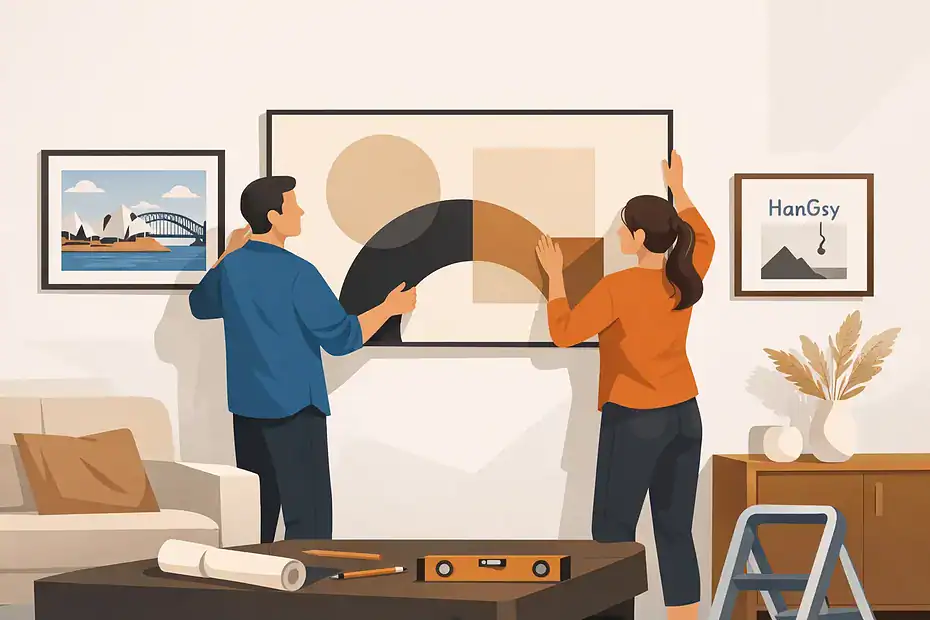
A large piece of art can make a room feel finished in one move – or make the whole wall look off if it is hung too high, too small for the space, or not secured properly. If you are figuring out how to hang oversized artwork, the real job is not just getting it on the wall. It is making sure it sits safely, feels balanced in the room, and stays exactly where you want it.
What counts as oversized artwork?
Oversized artwork usually means any piece that feels visually dominant on the wall or carries enough weight that standard hanging methods are a bad idea. That can be a large framed print over a sofa, a wide canvas above a bed, or a statement piece in an office lobby. Size matters, but so does weight, frame construction, and where the piece is going.
A lightweight canvas that spans five feet across needs a different approach than a heavy glazed frame of the same dimensions. This is where people often underestimate the project. They plan for the width they can see, but not for the load the wall has to carry.
How to hang oversized artwork without guessing
The best results come from treating placement and installation as two separate decisions. First, decide where the artwork should sit visually. Then choose the right method to support it physically. Skipping that split is how people end up with a piece that is secure but awkward, or well placed but risky.
Start by measuring both the artwork and the wall. You want enough surrounding space for the piece to breathe, but not so much that it feels disconnected from the furniture below it. As a general rule, oversized art should look intentionally scaled to the room. Above a sofa, console, bed, or credenza, the artwork usually looks best when it spans around two-thirds to three-quarters of the furniture width.
Height is the next big decision. In many rooms, the center of the artwork should land close to eye level. But that shifts depending on the setting. Over furniture, the piece should relate to the furniture, not float far above it. In a hallway or gallery-style area, a more standard eye-level placement often works. In commercial spaces, viewing distance and traffic flow can change the ideal height again.
That is why there is no single perfect number. It depends on ceiling height, furniture scale, and whether the room is more formal or relaxed.
The wall matters more than most people think
Before you pick hardware, you need to know what is behind the paint. Drywall, plaster, masonry, and stud walls all behave differently, and oversized artwork should never be treated like a lightweight frame.
Drywall alone has limits. If the piece is substantial, you may need to anchor into studs or use heavy-duty anchors rated for the exact load. Plaster can crack if handled poorly, especially in older properties. Brick and concrete walls require different tools and fixings entirely.
This is one of the biggest trade-offs in DIY installation. The hardware aisle makes a lot of products sound universal, but walls are not universal. A fixing that performs well in one surface may fail in another, or leave far more damage than expected if it needs to be repositioned.
Choose hardware based on weight, not hope
If you want to know how to hang oversized artwork securely, hardware selection is where the answer lives. The right hook, anchor, bracket, or cleat depends on the piece itself and the wall type.
For heavy or valuable pieces, a French cleat system is often one of the best options. It spreads weight more evenly, creates a stable hold, and helps keep the artwork flush to the wall. D-rings with proper wall anchors can also work well, especially when installed carefully and matched to the frame weight. Basic sawtooth hangers are usually not the right choice for oversized artwork. They may be fine for small decorative pieces, but large art needs more stability and more confidence.
It is also worth thinking beyond static weight. A large piece in a busy hallway, above a bed, in a commercial reception area, or in a home with children or pets may be nudged, bumped, or vibrated more than expected. That can change the safest installation method.
Placement mistakes that throw off the whole room
A lot of oversized artwork is technically installed well but visually wrong. The most common problem is hanging it too high. People get nervous about a large piece overpowering the room, so they raise it. The result is usually the opposite of what they want. The art feels disconnected, and the wall looks taller but emptier.
Another common issue is going too small with the anchor points. The frame may stay up, but it can tilt, shift, or sit unevenly over time. With a large piece, even a slight lean becomes obvious fast.
Spacing matters too. If the artwork is going above furniture, keep the gap tight enough to create a visual relationship. Too much space and the art and furniture start acting like unrelated elements. Too little space and the wall can feel cramped. In most rooms, a measured, moderate gap looks best, but the exact distance depends on the scale of the piece and what sits beneath it.
When oversized artwork needs two people, not one
Large art is awkward before it is heavy. Even a lighter oversized canvas can be difficult to position accurately without help, especially if you are trying to mark level points, protect the frame, and avoid scraping the wall all at once.
This is where the practical side of the job catches up with the aesthetic side. You may know exactly where the piece should go, but lifting it into place evenly and securing it without movement is another matter. Large framed works with glass or delicate finishes bring even more risk. A small slip can damage the piece, the wall, or both.
In homes with high ceilings, stair access, or narrow hallways, the challenge starts before the artwork reaches the wall. Transporting and rotating an oversized piece indoors often needs just as much care as hanging it.
Professional installation is often the cheaper decision
For inexpensive decor, trial and error may feel acceptable. For oversized artwork, mistakes get expensive quickly. Extra holes, cracked plaster, poor alignment, failed anchors, or frame damage can cost more to fix than the original installation would have.
That is why many homeowners, office managers, and business owners choose a specialist rather than treating it like a general handyman task. Proper art hanging is part measurement, part wall knowledge, and part visual judgment. You need all three if the final result is meant to look clean and stay secure.
A professional installer can also help with decisions people often get stuck on, like whether the piece is the right size for the wall, whether it should be centered to the room or the furniture, and whether a different hanging method would give a stronger finish. That mix of technical accuracy and placement advice is what makes a noticeable difference.
For clients in Sydney, HanGsy is often called in for exactly this kind of job – when the piece is too important, too heavy, or too visually significant to leave to guesswork.
A few situations where the approach changes
Not every oversized piece should be hung the same way. A large canvas is usually more forgiving because it is lighter and has no glass, but it can still bow or sit unevenly if the support points are wrong. A framed artwork with glazing needs more careful handling and often more secure hardware. Mirrors are in a different category again, because their weight and break risk raise the stakes.
Rental properties also create a different set of decisions. You may need a secure result while minimizing wall damage and staying within property rules. That usually narrows your options and makes precise planning more important.
Commercial spaces have their own demands. Clean alignment, durability, and public safety matter more when the piece is in a reception area, meeting room, or shared corridor. What looks acceptable at home may not be appropriate in a workplace.
Before you make the first hole
If you are planning how to hang oversized artwork, pause before drilling. Measure the piece, measure the wall, confirm the wall type, check the hardware rating, and map the final height with tape or paper first. That short prep step catches most of the mistakes people regret later.
And if the artwork is heavy, valuable, fragile, or simply too important to get wrong, professional installation is not an extra. It is the safest way to protect the piece, the wall, and the look of the room.
The right artwork should feel effortless once it is up. Getting it there usually is not.
Pingback: Can Heavy Art Damage Walls? Yes - Here’s How - HanGsy
Pingback: Canvas Hanging Done Right - HanGsy
Comments are closed.