
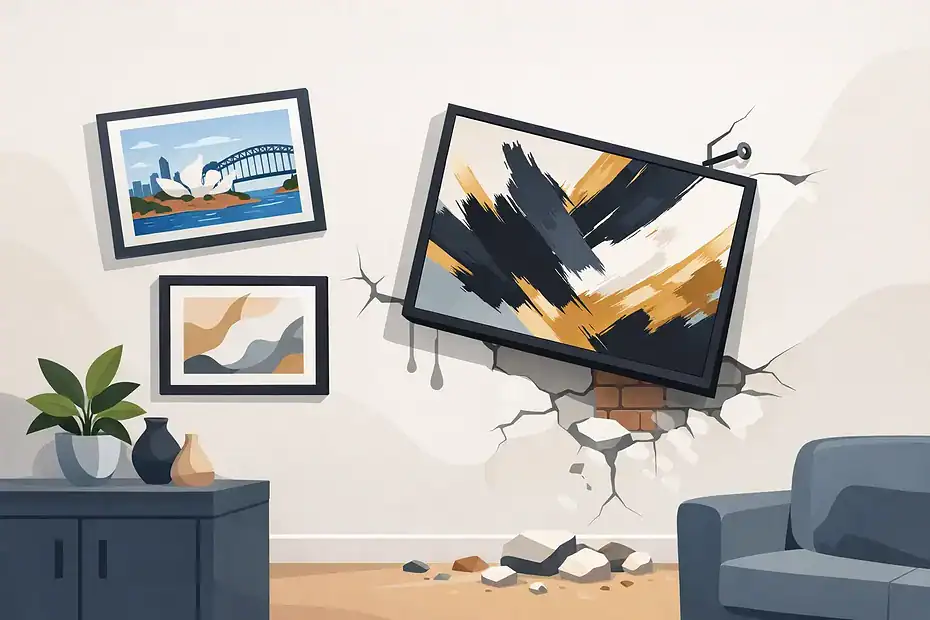
A large framed print can look perfectly secure right up until the drywall starts to crack, the hook shifts, or the whole piece begins to lean. So, can heavy art damage walls? Yes – and in most cases, the problem is not the art itself. It is the combination of weight, wall material, hardware, and installation method.
That is why heavy pieces need more than a nail and a rough guess at placement. If the goal is to protect both the wall and the artwork, the details matter.
Can heavy art damage walls? What actually causes it
Heavy art damages walls when the load is not supported correctly. That can mean the wrong anchor, poor weight distribution, weak wall material, or hanging into a surface that was never meant to carry that kind of load.
Drywall is a common example. Many people assume that if a picture hook feels firm at first, the wall is handling the weight. In reality, drywall can slowly fail under pressure, especially with oversized frames, mirrors, or glass-fronted artwork. The damage may start small – a widening screw hole, chipped paint, or a faint stress crack – then become a larger repair job.
Plaster walls can be even less forgiving. They may seem solid, but they can crack or crumble if hardware is installed without the right approach. Brick and concrete are stronger, but they still require the correct fasteners and drilling method. A strong wall does not automatically mean a safe installation.
The short version is simple: walls are damaged when the hanging method does not match the wall type and the weight of the piece.
The most common types of wall damage from heavy art
Some damage is cosmetic. Some is structural to the surface. Both matter, especially if the piece is valuable or the room is finished carefully.
The most common issue is pulled-out hardware. This happens when a screw, hook, or anchor starts to loosen under weight. Once that movement begins, the wall opening expands and the hold gets weaker. It often leaves behind torn drywall paper, larger holes, and chipped paint.
Cracking is another frequent problem. You may see hairline cracks around the mounting point, especially in plaster or older walls. That usually means the pressure is concentrated in too small an area.
Then there is compression and denting. Heavy frames that sit unevenly or press against the wall in the wrong spots can leave marks, especially if they shift over time. In commercial spaces and high-traffic homes, repeated vibration from doors closing or foot traffic can make this worse.
The biggest risk, of course, is a full fall. At that point, the wall is damaged, the frame may be broken, and nearby furniture or flooring can be affected too.
Wall type changes everything
If you are asking whether heavy art can damage walls, the better question is which wall you are hanging on.
Drywall
Drywall is common and relatively easy to patch, but it is not especially strong on its own. It can hold heavy art safely, but only if the hardware is rated correctly and, where possible, tied into a stud. For larger pieces, relying on a single standard picture hook is often where problems begin.
Plaster
Plaster can crack more easily during installation, particularly in older properties. It often needs a more careful drilling technique and the right anchor choice. A rushed install can create visible damage before the artwork is even hung.
Brick or concrete
These walls are more durable, but they are not foolproof. Wrong drilling depth, poor plug selection, or misaligned hardware can still lead to damage or unstable mounting. Repairs can also be more involved if mistakes are made.
Metal studs and specialty walls
In offices, apartments, and newer buildings, wall construction can be less straightforward than expected. Metal studs, insulated walls, and hidden services all affect how a heavy piece should be mounted. This is where experience makes a real difference.
Weight is only part of the story
Two pieces can weigh the same and behave very differently on a wall.
A compact framed artwork may be easier to secure than a large mirror with the same weight, simply because the mirror creates a different pull on the wall. Size, depth, frame design, and where the hanging points sit all influence the load.
A wide piece often needs weight distributed across two mounting points or a bracket system rather than one central hook. Pieces with glass, thick frames, or uneven backing can also place more stress on hardware than people expect.
Movement matters too. If a piece is in a hallway, stairwell, or near a frequently used door, vibration and contact can gradually loosen fixings. What holds today may not hold well six months from now if the setup was marginal from the start.
Signs your art may already be damaging the wall
Not every problem is obvious right away. Heavy wall art can stay up while slowly creating surface damage behind it.
A frame that no longer sits level is one warning sign. So is a hook or screw that appears to be pulling forward. If the wall around the fixing point looks raised, cracked, or powdery, that usually means the surface is under strain.
You may also notice the piece shifting more than it used to when touched lightly. That movement should not be ignored. Stable art should feel secure, not loose or reactive.
For expensive artwork or heavy mirrors, it is worth checking the hanging points before there is visible failure. A small issue is much easier to correct than a fallen piece and a torn wall.
How to prevent damage when hanging heavy art
The safest installation starts with assessment, not hardware. You need to know the wall type, estimate the true weight, and choose a fixing method designed for both.
Stud mounting is often the strongest option for drywall, but it is not always possible based on placement. When studs do not line up with the ideal visual position, the right heavy-duty anchors or mounting systems can bridge that gap. The key is choosing hardware with a realistic load rating, not a best-case one.
Using two fixing points instead of one can improve weight distribution and reduce stress on the wall. For oversized or valuable pieces, bracket systems or security hangers may offer a better result than standard hooks.
Placement also matters. Hanging a heavy piece too high, too low, or off-balance can put unnecessary force on the mount and affect how the art sits in the room. Good installation is part engineering and part visual alignment.
This is one reason specialist installers are different from general handymen. The job is not only to make the piece stay up. It is to make it secure, level, appropriately placed, and less likely to damage the wall over time.
When DIY is risky
There are lighter frames that many homeowners can hang successfully on their own. Heavy art is where the margin for error gets smaller.
DIY becomes risky when the piece is oversized, fragile, expensive, or going onto plaster, masonry, tiled, or uncertain wall surfaces. It is also risky when exact placement matters – above a bed, sofa, stair landing, console, or in a commercial reception area where both safety and presentation count.
The cost of getting it wrong is rarely just a patch job. It can mean damaged walls, damaged art, and a result that still looks off-center.
For homes and businesses that want a clean finish without guesswork, professional installation usually saves time and prevents rework. A specialist service like HanGsy is brought in for exactly this reason – secure installation, accurate placement, and less risk to the wall and the piece.
Is wall damage always permanent?
Not usually, but some repairs are easier than others.
Drywall holes and paint damage can often be repaired cleanly if the issue is caught early. Plaster cracks may take more care to restore properly. Brick, concrete, tile, and stone surfaces can be harder to patch invisibly, which makes prevention more valuable.
If the artwork has already been hung incorrectly, removing it and reinstalling it the right way can stop further damage. Waiting tends to make the repair larger, not smaller.
Heavy art can absolutely damage walls, but that does not mean you need to avoid statement pieces, large mirrors, or oversized frames. It just means the installation has to match the wall, the weight, and the setting. When those details are handled properly, the piece looks better, stays safer, and the wall stays in good shape too.
Pingback: Heavy Mirror Installers Sydney Homeowners Trust - HanGsy
Pingback: Best Office Art Placement That Actually Works - HanGsy
Comments are closed.