
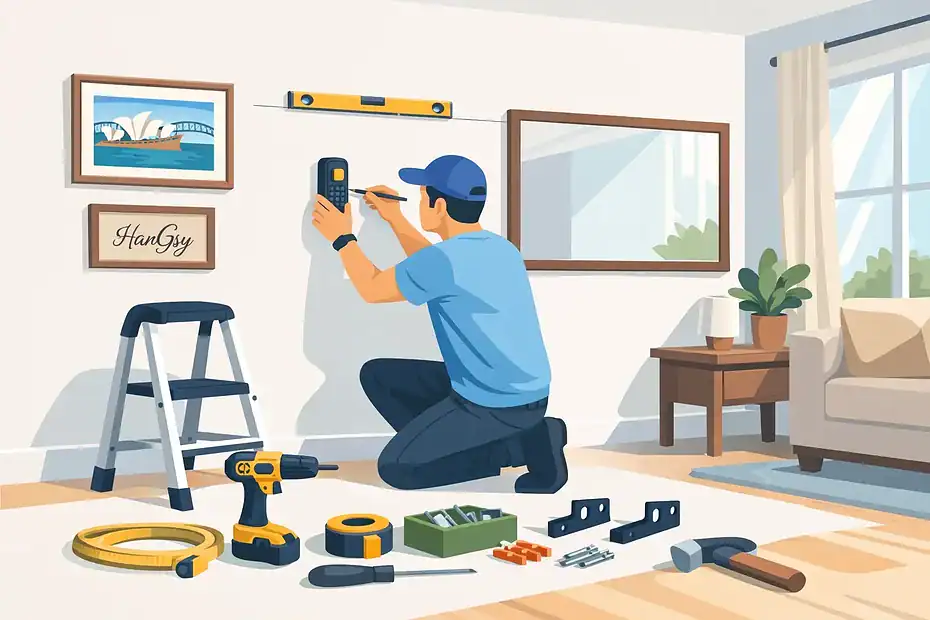
A heavy mirror usually looks simple right up until you try to lift it, level it, and trust that it will stay on the wall for years. If you are figuring out how to hang heavy mirror safely, the real job is not just getting it centered. It is making sure the wall can support the load, the hardware matches the mirror, and the placement works both visually and structurally.
That is where many DIY attempts go wrong. A mirror can be perfectly straight and still be poorly supported. It can also be mounted securely but end up too high, too low, or awkwardly placed in the room. Safe installation takes both technical judgment and a good eye.
How to hang heavy mirror safely without guesswork
The first thing to check is the mirror itself. Weight matters, but so does the hanging system attached to the back. Some mirrors come with D-rings, some use a wire, and some are designed for a bracket or cleat system. Those are not interchangeable in every case.
For heavier mirrors, wire alone is often not the best choice. Wire can shift, stretch slightly over time, and put uneven force on the fixings. A metal cleat or fixed bracket system usually gives a more secure result, especially for large pieces or mirrors in busy areas like hallways, living rooms, offices, or commercial spaces.
The wall type matters just as much. Drywall, plaster, masonry, and concrete all require different fixings. Even within drywall, there is a major difference between fastening directly into a stud and relying on hollow-wall anchors. The safest method depends on what is behind the surface, not just what the wall looks like from the outside.
Start with the wall, not the mirror
People often begin by measuring where they want the mirror to sit. That is understandable, but the better starting point is identifying what kind of wall you have and where the solid support points are.
If there is a stud exactly where the mounting points need to go, that is usually the strongest option. If there is no stud in the right place, you may need heavy-duty wall anchors rated well above the mirror’s actual weight. That extra margin matters. A mirror is static most of the time, but installation stress, vibration, accidental bumps, and long-term pull on the wall all add up.
Plaster walls need extra care because they can crack if handled roughly or drilled without the right approach. Brick and concrete can hold significant weight, but only when the correct masonry hardware is used. Tile walls add another layer of difficulty because drilling must be precise to avoid cracks, chips, or expensive damage.
This is why one-size-fits-all advice rarely helps. The right hardware for a 40-pound mirror on drywall is not the same as the right hardware for a 40-pound mirror on masonry, and neither is automatically right for a tall mirror with an uneven weight distribution.
Know when anchors are enough and when they are not
Heavy-duty anchors can work well in drywall when properly selected and installed. But there is a limit. If the mirror is especially large, unusually valuable, mounted in a high-traffic area, or going above furniture where people sit or walk, many property owners prefer the extra confidence of direct structural support or a professional bracket system.
That is a practical decision, not overkill. The heavier and more important the mirror, the less sense it makes to gamble on a borderline fixing.
Placement affects safety too
A safe install is not only about holding power. Placement matters because mirrors amplify mistakes. If it is off-center, too high, too low, or too close to another feature, it will stand out immediately.
Most mirrors look best when they relate clearly to the furniture or architectural element below them. Over a console, fireplace, buffet, or bathroom vanity, the mirror should feel intentionally placed rather than floating. That usually means measuring the width of the furniture, marking the visual center, and deciding on a height that works for the room instead of using a generic rule.
There is also a practical side to placement. If a heavy mirror is going above a bedhead, sofa, stair landing, or reception seating, the installation standard should be especially strict. In these locations, both security and exact positioning matter more because people spend time directly underneath.
The hardware has to match the job
One of the biggest mistakes in learning how to hang heavy mirror safely is assuming the hardware in the box is always suitable. Sometimes it is. Sometimes it is only suitable for a very specific wall type, or for ideal conditions that do not match the actual site.
Mounting hardware should be chosen based on the mirror’s true weight, the wall material, and the style of hanger on the back. It should also be rated with enough capacity to comfortably exceed the load. If the mirror uses two mounting points, both points need to be measured accurately so the weight is shared evenly.
If the mirror has poor-quality hanging attachments on the back, those may need to be upgraded before it ever goes on the wall. That step gets missed often. Strong wall anchors cannot compensate for weak rings, loose screws, or a frame that is not built to carry the load safely.
Why leveling is more than a finishing touch
With a heavy mirror, leveling is part of the installation, not a cosmetic extra. If one side sits higher than the other or one fixing takes more weight, the setup can become unstable over time. A mirror that looks almost level can still be under uneven tension.
This is where careful measuring pays off. Marking center lines, checking the distance between hanging points, and confirming level before drilling helps avoid unnecessary holes and repositioning. On delicate walls, that matters a lot.
Common DIY problems
Most failed mirror installs come down to a few issues. The first is underestimating weight. The second is using the wrong anchor for the wall. The third is poor measuring, which leads to rushed corrections and extra damage.
Another common problem is trying to lift and mount a large mirror solo. Even if the hardware is right, the handling can go wrong. Large mirrors are awkward, and shifting just a little while mounting can chip edges, damage the frame, or pull hardware out of alignment before the mirror is even fully seated.
Then there is the aesthetic side. A lot of people can physically attach a mirror to a wall, but they are not fully confident about positioning. In homes and business spaces where presentation matters, that part is not minor. A mirror changes light, balance, and the feel of a room, so placement should be intentional.
When professional installation makes sense
If the mirror is oversized, especially heavy, valuable, going onto tile, masonry, or plaster, or needs exact placement in a finished room, professional installation is usually the better call. The cost of getting it done properly is often far lower than the cost of repairing a broken mirror, patching a damaged wall, or replacing chipped tile.
This is especially true in apartments, commercial fit-outs, reception areas, and styled residential spaces where the mirror is part of the overall visual plan. In those situations, the goal is not just getting it onto the wall. The goal is security, clean presentation, and confidence that it has been installed the right way.
Specialist installers also know how to work around the practical details people do not always see coming, like uneven wall surfaces, hidden obstacles, difficult fixing positions, and mirrors that need slight adjustments to sit visually right within the room. That mix of technical skill and visual judgment is what separates a clean result from a stressful one.
For clients who want that balance of secure mounting and careful placement, a specialist service like HanGsy can take the uncertainty out of the process.
How to decide your next step
If your mirror is modest in size, your wall type is straightforward, and you are confident identifying studs or using correctly rated anchors, a DIY install may be reasonable. Take your time, confirm the wall structure, and do not rely on guesswork.
If any part of the job feels uncertain, the safest move is to pause before drilling. Heavy mirror installation has very little margin for error, and once damage is done, it is harder and more expensive to put right than most people expect.
A well-hung mirror should look effortless. Getting there safely usually is not, and that is exactly why careful planning matters.