
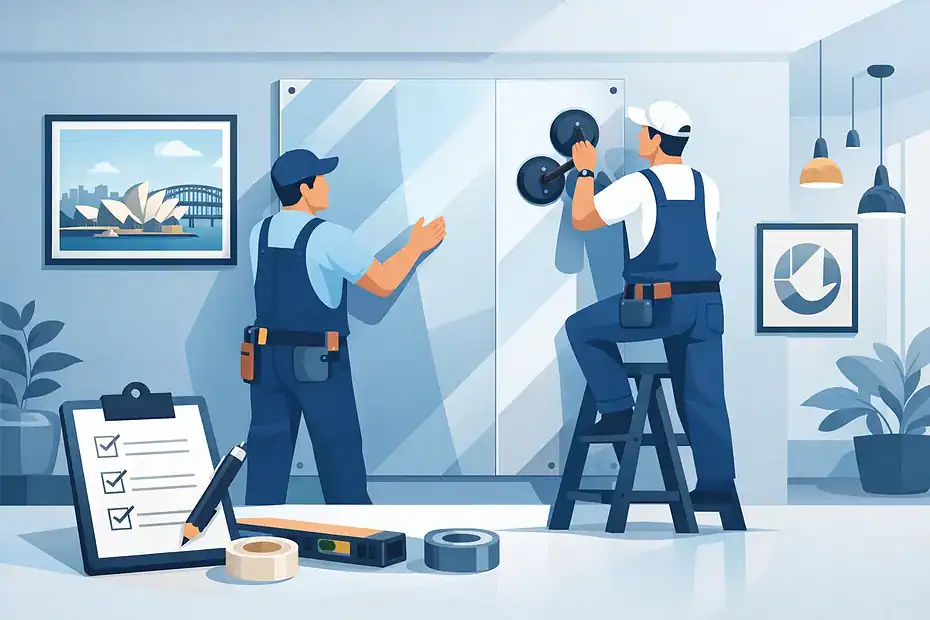
A commercial mirror that sits a half inch off level, reflects the wrong sightline, or pulls against the wrong wall fixing can make an otherwise polished space look careless fast. That is why a commercial mirror installation checklist matters before the mirror ever reaches the wall. In offices, gyms, salons, retail stores, and shared common areas, the job is not just to get the mirror up. It needs to be secure, cleanly positioned, visually balanced, and right for the way people use the room.
Why a commercial mirror installation checklist matters
Commercial spaces place more demands on mirror installation than most residential jobs. There is often higher foot traffic, more strict safety expectations, tighter timelines, and a stronger need for presentation. A mirror in a lobby or reception area has a different job than one in a fitness studio or restroom, and the installation method should reflect that.
This is where a checklist helps. It reduces guesswork and catches the small details that tend to cause expensive rework later, like drilling into the wrong substrate, hanging at the wrong viewing height, or choosing hardware that does not suit the mirror’s size and weight. It also helps align practical concerns with visual ones, because in commercial settings both matter equally.
The pre-installation checks that make the biggest difference
Before installation day, the first question is simple: what exactly is being installed, and where? That sounds obvious, but many commercial mirror issues start with incomplete information. You need confirmed mirror dimensions, thickness, edge type, weight, and whether the mirror is framed, polished, beveled, or designed for adhesive mounting, clips, or a rail system.
The wall itself needs just as much attention. Drywall over studs, masonry, tile, concrete, laminate panels, and partition walls all behave differently. Some can support significant weight with the right hardware. Others need reinforcement or a different mounting method entirely. If the substrate is unknown, the installation plan is still incomplete.
Room use also matters. A mirror installed in a salon near styling stations will be viewed up close and constantly used. A decorative mirror in a hospitality setting may be more about proportion and reflection. In a gym, safety and durability become central. In a restroom, moisture and cleaning exposure come into play. One checklist cannot ignore context.
Commercial mirror installation checklist for planning
A practical commercial mirror installation checklist starts with scope, site conditions, and intended result. Before any drilling or lifting, confirm the following in full:
- Mirror size, thickness, and total weight
- Framed or frameless construction
- Exact wall material and condition
- Final placement height and horizontal position
- Reflection goal, sightline, and room symmetry
- Required hardware or adhesive system
- Access constraints, including elevators, stairs, and after-hours entry
- Safety needs for public or staff-facing areas
- Whether multiple mirrors must align across one wall or several rooms
These points sound basic, but they are where accuracy begins. If even one is unclear, the installer is forced to make assumptions on site, and assumptions are usually what create visible errors.
Placement should be measured for the room, not just the wall
One of the most common mistakes in commercial spaces is treating the mirror like a standard object that simply needs centering. In reality, placement should respond to furniture, counters, vanities, equipment, lighting, and walking paths. A mirror can be technically centered on a wall and still look wrong in the room.
For example, in a reception area, the mirror may need to align with a console, signage, or pendant lighting rather than the full wall width. In a restroom, the bottom height may be dictated by sink position and user comfort. In a gym or studio, a run of mirrors needs consistent top and bottom lines across the whole span. Good installation starts with visual logic, not just tape measure math.
Safety and hardware decisions come before installation day
A heavy commercial mirror should never be treated as a casual hang. The fixing method must match the wall type and load requirements. Depending on the mirror and site, that may mean brackets, J-bars, Z-clips, mechanical fasteners, mirror mastic, or a combined support method. The right answer depends on weight, substrate, and use case.
There is also a trade-off between minimal visible hardware and maximum mechanical support. Frameless mirrors in high-visibility spaces often need a clean finish, but visual simplicity should not come at the cost of security. In some cases, a nearly invisible support system is possible. In others, discreet visible hardware is the better call.
On-site checks before the mirror goes up
Once on site, the checklist shifts from planning to verification. Measurements should be rechecked against the actual wall, not just plans or marked drawings. Commercial fit-outs can change during final stages, and millwork, lighting, tile lines, or power points may not sit exactly where expected.
The wall should be inspected for level, plumb, hidden services, surface defects, and any signs that the intended fixing points are unsuitable. If the mirror is large, the path from delivery point to installation area should also be reviewed. Tight hallways, glass doors, and active workspaces can all affect handling.
This is also the point to confirm who needs to approve final placement. In many commercial projects, delays happen because the mirror is ready to install but no one has signed off on the exact position. A quick visual approval before drilling can save a lot of backtracking.
Installation quality is about finish, not just fixing
A secure mirror is only half the job. In commercial interiors, finish quality is immediately visible. Uneven spacing, fingerprints behind the glass, chipped edges, inconsistent clip placement, and poor alignment with nearby features all stand out.
Clean line work matters. So does spacing consistency where multiple mirrors are installed side by side. Reflections should feel intentional. If a mirror catches clutter, harsh ceiling glare, or awkward angles, the room can feel less refined even when the mirror itself is expensive.
This is one reason specialist installers are often the better choice than general labor. Commercial mirror hanging sits at the intersection of safety, precision, and presentation. You need all three.
What to check after installation
A strong commercial mirror installation checklist does not end when the hardware is tightened. The final review should confirm that the mirror is level, stable, properly supported, and clean. Adhesive-based installs may also require cure time protection and clear communication so the mirror is not disturbed too soon.
Check the finish from multiple positions in the room. Stand close, then step back. Look at the top line, side margins, and reflected view. Confirm that the mirror relates properly to surrounding fixtures and that any grouped mirrors match one another. If the installation is in a public-facing business, this final visual pass is worth the extra few minutes.
For managers and owners, it also helps to document the fixing method and mirror dimensions for future maintenance or renovations. If the space is updated later, knowing how the mirror was mounted can prevent unnecessary damage during removal.
When professional installation is the smart move
Some commercial mirrors are straightforward. Many are not. Large-format pieces, tiled walls, masonry surfaces, mirrored feature walls, and installations in active business environments all leave little room for error. If the mirror is heavy, expensive, prominent, or part of a broader fit-out, professional installation is usually the safer and more efficient option.
That is especially true when appearance matters as much as support. A qualified installer does more than mount the piece. They assess wall conditions, choose suitable hardware, refine placement, and make sure the result looks considered. For businesses that want the job done accurately without wall damage, delays, or second attempts, that experience matters.
For Sydney businesses managing office updates, retail presentation, hospitality interiors, or client-facing spaces, working with a specialist service such as HanGsy can remove a lot of uncertainty from the process.
A well-installed commercial mirror should feel effortless once it is on the wall. Getting to that point takes planning, the right hardware, careful handling, and an eye for placement that suits the space. The checklist is what keeps all of that moving in the same direction.